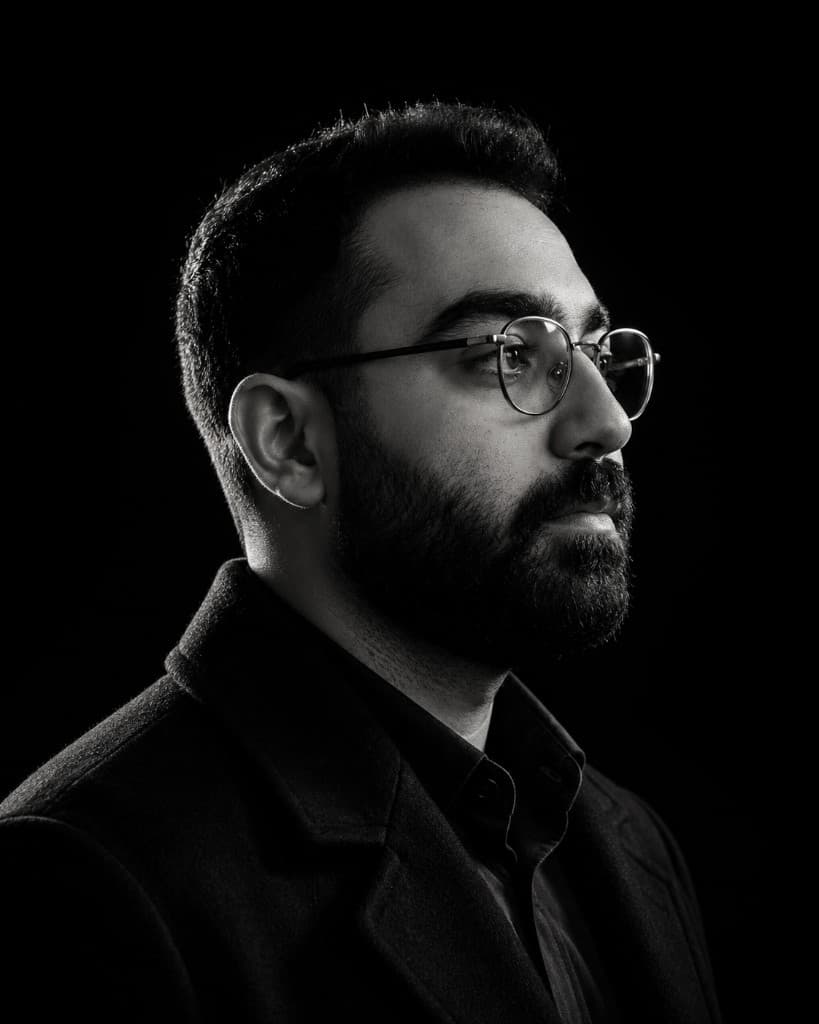
Jihad Badran — Software Engineer & Product Composer

Software Engineer & Product Composer

Jihad Badran

I care about the full arc: the problem, the shape of the solution, the code that carries it, and the experience when someone finally touches it.

Ramallah & Remote · Available for select initiatives

The person

I make software that has to work in the real world.

I am Jihad Badran — a software engineer and product composer. I care about the full arc of making software: the problem, the shape of the solution, the code that carries it, and the experience someone has when they finally touch it.

I work from mission, not from a pile of features. I have founded a two-sided health product, shipped an AI medical scribe in under a month, and owned the UI of a $3M EMR. I shape the solution, stay on that thread, and I do not call it done until it is correct.

Now
Senior Frontend Engineer, Stella Stays
Base
Ramallah & Remote
Open to
Select initiatives

Selected Works

Featured Projects & Systems

A collection of software engineering initiatives and thoughtfully composed interfaces.

View all projects

Healthtech, Palestine

NutriFit

Two-sided nutrition platform — a clinic web portal for nutritionists, and a Flutter app for clients to find specialists, journal meals, track progress, book, and chat.

Product surfaces
2

Product surfaces

iOS & Android
Live

iOS & Android

Bilingual RTL
AR + EN

Bilingual RTL

Explore

AI, Healthtech

NoteGen

Shipped an AI medical scribe MVP in under 30 days — one record button from session to doctor-approved SOAP notes.

MVP shipped
< 30d

MVP shipped

Record button
1

Record button

Clinical notes
SOAP

Clinical notes

Explore

Medtech, Canada

MonMedx

UI owner for a $3M medtech EMR platform — from requirements and mockups through engineering and team delivery.

Platform
$3M

Platform

Role
UI Owner

Role

Explore

SaaS

Aplyze

Led UI engineering and team delivery for a platform focused on integrations, faster approvals, and effortless management.

Explore

How I work

Mission. Shape. Build. Finish.

I stay on the mission and I deliver it correctly.

  1. 01

    Name the outcome

    Mission

    I start by naming the mission — the actual job, not a feature list. Until that is clear, I do not build.

    Inputs
    • The job as described
    • Who it is for
    • Time, platform, existing work
    Deliverables
    • A one-sentence mission
    • What done looks like
    • What I will not build
    Tools
    • Conversation
    • A written brief
    • The current product or codebase
  2. 02

    Give it a form

    Shape

    I shape the work before I write it — the path, the constraints, the smallest correct version.

    Inputs
    • The mission sentence
    • Constraints I already named
    • Existing UI, data, and APIs
    Deliverables
    • Flows I can point at
    • UI mockups
    • The smallest correct version
    Tools
    • Design files when they exist
    • The running product
    • Types and API contracts
  3. 03

    Stay on the thread

    Build

    Then I stay on that path. One thread. The code, the structure, the experience someone will actually touch.

    Inputs
    • The agreed shape
    • The mission as a check
    • Access to the systems I am wiring
    Deliverables
    • Working software on that path
    • Structure that holds
    • The experience someone will actually use
    Tools
    • TypeScript
    • React, Next.js, or Flutter
    • Node, GraphQL, or Supabase
  4. 04

    Deliver it correctly

    Finish

    I finish when it is correct — complete, honest, and ready — not when it is decorated.

    Inputs
    • The built thread
    • The original mission
    • What correct was named at the start
    Deliverables
    • A shipped, usable product
    • Handover notes if someone else will own it
    • An honest list of what is still out
    Tools
    • The running product
    • Device and browser checks
    • The mission sentence

Perspective

Software Architecture with Compositional Taste

I bridge deep systems engineering and considered product experience. Every application I ship is built with rigorous reliability, type safety, and intentional interaction design.